


Alsace
We entered Strasbourg and left the rains of Verdun behind. A few of our kids and parents are mildly to moderately sick – a cold is making the rounds on the bus. We are doing what we can to stop the spread – basically we leave the people with the most persistent cough behind, telling them we’ll come back for them, and then we don’t. So now we are traveling with only 27 rather than 37.
Of course I’m joking. Sorry to all the worry-prone moms reading this. The parents are doing a great job helping to quarantine the sick into the same rooms, but we can’t do much about the bus – it’s basically one big germ tube now. The illness hasn’t really slowed us down, and the kids are still enthusiastic and enjoying themselves.
Strasbourg is the main city in the French province of Alsace, and represents a meeting of cultures and languages between the French and the German. It is also an international political and economic hub, containing one of the main offices of the European Union. We stayed in a new hostel this year called Ciarus. It is a very clean, spacious, organized place – it has an air of German efficiency. Working at the front desk was an African man who spoke perfect French with his British accent, and a guy from California. Very international.
Fun in the Ciarus hostel:
Aazam is quite the pool player.
The Strasbourg cathedral, with its towering spire and its dirty pink sandstone lace-like façade was made even more powerful when, on Sunday morning, as we stood directly in front of the cathedral, the massive, deep bells started ringing. We all just stood there enthralled by the sights and sounds surrounding us. The bells are so loud you can hardly hear the person next to you; luckily I had given some history of Strasbourg and the cathedral the evening before.
Again, we are so puny.
Fun with the wide angle lens.
After the cathedral, we were off to Le Petit France, the sound of the bells following us through the city. I asked the kids not to touch anything, since this was the little island they sent the plague victims of the middle ages to. Hopefully a new illness doesn’t start making the rounds on the bus; I hear the plague is quite nasty.
Passing the medieval house of the tanners.
For some kids, the most fun is to be had chasing innocent pigeons around.
Last year, on our drive from Strasbourg to Lucerne, Switzerland, Rens pointed out a castle on a hill to me. After doing a bit of research on it, I booked a guided tour of Chateau de Haut-Koenigsbourg, an Alsatian castle restored under the instructions of Emperor Wilhelm II (the German Kaiser), who wished for it to be a museum of the Middle Ages and a symbol of German power in the region. Alsace was part of the Germanic Holy Roman Empire until 1681, was French until the Franco-Prussian war of 1870-71, German until the end of the First World War, French from the signing of the Treaty of Versailles to the Second World War, German during the Second World War, and French since the end of the Second World War. Confusing!
IN the castle's courtyard.
Looking down on Alsace from the castle stronghold.
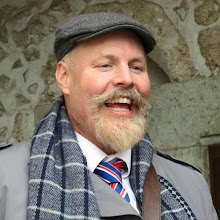
The castle was a great find, and we all thanked Rens for mentioning it to me last year. The girls (and the moms?) liked our guide a lot – he was very…. knowledgeable. Luc told us straight off that "Thees ees my feerst time to guide een eenglish" but he did a great job of explaining medieval castle life as we explored the castle’s living areas, which have been restored to mimic conditions in the 15th century. I liked the connections he made to many of the things I taught these kids in Social Studies 8 last year – for example, how a castle would be self-sufficient and why this was necessary. After a well deserved "merci beaucoup" to Luc, we are now on the bus heading to Switzerland, and hoping to find a functioning bathroom for the girls soon.
Luc
"Thees ees where thee nobels would enteer"
"Thees were used to keel"
Craig
We entered Strasbourg and left the rains of Verdun behind. A few of our kids and parents are mildly to moderately sick – a cold is making the rounds on the bus. We are doing what we can to stop the spread – basically we leave the people with the most persistent cough behind, telling them we’ll come back for them, and then we don’t. So now we are traveling with only 27 rather than 37.
Of course I’m joking. Sorry to all the worry-prone moms reading this. The parents are doing a great job helping to quarantine the sick into the same rooms, but we can’t do much about the bus – it’s basically one big germ tube now. The illness hasn’t really slowed us down, and the kids are still enthusiastic and enjoying themselves.
Strasbourg is the main city in the French province of Alsace, and represents a meeting of cultures and languages between the French and the German. It is also an international political and economic hub, containing one of the main offices of the European Union. We stayed in a new hostel this year called Ciarus. It is a very clean, spacious, organized place – it has an air of German efficiency. Working at the front desk was an African man who spoke perfect French with his British accent, and a guy from California. Very international.
Fun in the Ciarus hostel:
Aazam is quite the pool player.
The Strasbourg cathedral, with its towering spire and its dirty pink sandstone lace-like façade was made even more powerful when, on Sunday morning, as we stood directly in front of the cathedral, the massive, deep bells started ringing. We all just stood there enthralled by the sights and sounds surrounding us. The bells are so loud you can hardly hear the person next to you; luckily I had given some history of Strasbourg and the cathedral the evening before.
Again, we are so puny.
Fun with the wide angle lens.
After the cathedral, we were off to Le Petit France, the sound of the bells following us through the city. I asked the kids not to touch anything, since this was the little island they sent the plague victims of the middle ages to. Hopefully a new illness doesn’t start making the rounds on the bus; I hear the plague is quite nasty.
Passing the medieval house of the tanners.
For some kids, the most fun is to be had chasing innocent pigeons around.
Last year, on our drive from Strasbourg to Lucerne, Switzerland, Rens pointed out a castle on a hill to me. After doing a bit of research on it, I booked a guided tour of Chateau de Haut-Koenigsbourg, an Alsatian castle restored under the instructions of Emperor Wilhelm II (the German Kaiser), who wished for it to be a museum of the Middle Ages and a symbol of German power in the region. Alsace was part of the Germanic Holy Roman Empire until 1681, was French until the Franco-Prussian war of 1870-71, German until the end of the First World War, French from the signing of the Treaty of Versailles to the Second World War, German during the Second World War, and French since the end of the Second World War. Confusing!
IN the castle's courtyard.
Looking down on Alsace from the castle stronghold.
The castle was a great find, and we all thanked Rens for mentioning it to me last year. The girls (and the moms?) liked our guide a lot – he was very…. knowledgeable. Luc told us straight off that "Thees ees my feerst time to guide een eenglish" but he did a great job of explaining medieval castle life as we explored the castle’s living areas, which have been restored to mimic conditions in the 15th century. I liked the connections he made to many of the things I taught these kids in Social Studies 8 last year – for example, how a castle would be self-sufficient and why this was necessary. After a well deserved "merci beaucoup" to Luc, we are now on the bus heading to Switzerland, and hoping to find a functioning bathroom for the girls soon.
Luc
"Thees ees where thee nobels would enteer"
"Thees were used to keel"
Craig

No comments:
Post a Comment